
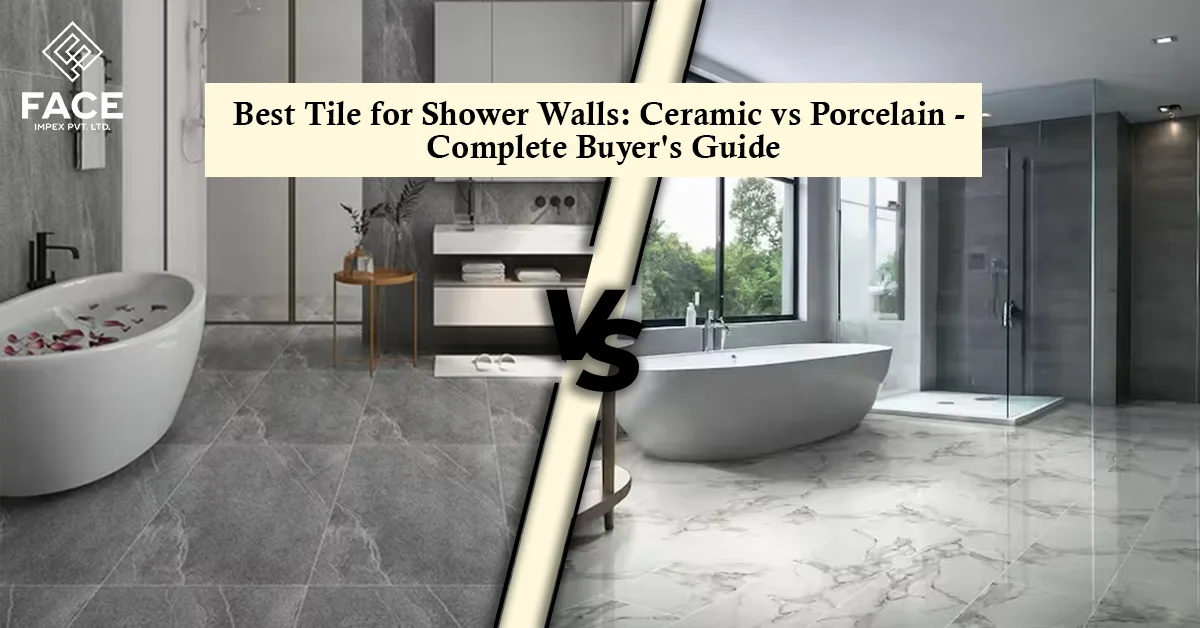
Choosing the right tile to upgrade your shower may appear like a lot with the number of options available. Ceramic and porcelain are some of the top choices when considering alternatives to use as the best tile in the shower walls. This guide dissects the ceramic vs porcelain comparison to guide you in deciding what is best suited to your project in the bathroom.
Getting the Basics of Shower Wall Tiles
Before diving into tile types, it’s important to know what makes a tile great to use in a shower. Shower walls deal with constant moisture changing temperatures, and the need to stay easy to clean. To handle these, the best tile for shower walls should resist water, last a long time, and look nice plus, it should fit your budget.
Ceramic Tiles: A Classic Option
Ceramic tiles have been a favorite pick to use in bathrooms for a long time. They are made from clay that gets fired at somewhat lower heat levels compared to porcelain. These tiles bring plenty of benefits to showers.
Why Choose Ceramic Tiles
Affordable Option: The price of ceramic tiles is approximately between 20 and 30 percent of porcelain. They can be preferred by homeowners who want to save money. Through savings, the available space can be increased or less flashy finishes can be had.
Simple to Install: Ceramic is softer than porcelain, so cutting and installing it becomes easier. This ease can mean spending less on labor. DIYers often find ceramic tiles more manageable to work with.
Design Flexibility: Ceramic tiles have a lot of colors, designs and textures. You can explore everything from subway tile looks to intricate mosaic styles. Ceramic tiles offer endless ways to build your perfect shower design.
Water-Resistance Ability: Ceramic tiles aren’t as dense as porcelain, but when sealed , they can block water well enough for most showers.
Downsides of Ceramic Tiles
More Porous Material: Ceramic tiles tend to absorb more and need sealing more often. Over time, they may stain or let moisture in.
Less Durable: Compared to porcelain ceramic chips and cracks more in busy spaces or if hit by hard objects.
Porcelain Tiles: The Top-Tier Option
To examine ceramic and porcelain for shower use, porcelain tiles often stands out as the better option. Made using finer clay and fired at very high temperatures, porcelain has qualities that tend to perform better.
Benefits of Using Porcelain Tiles
Better Water Protection: The dense porcelain construction lets it absorb little water, approximately less than 0.5 percent to the extent that porcelain is nearly waterproof without having a seal.
Tough and Long-Lasting: High firing of porcelain produces a material that is strong and tough which is less likely to be able to chip, scratch, or wear out unlike ceramic.
Easy to Care For: Porcelain is non-porous on the surface therefore, it neither stains nor allows bacteria to grow. It doesn’t require much to make it clean and good-looking.
Frost Resistance: Porcelain freezes well such that people can use it outside or in low temperatures regardless of whether it is an essential consideration in indoor showers.
Looks Like the Real Thing: New porcelain tiles copy natural stuff like wood or marble so well that they fool many. They perform better though, compared to the originals.
Porcelain Tile Drawbacks
Costs More: You spend more on high quality tiles.. Porcelain is 25 to 50 percent pricier than ceramic ones.
Tricky to Install: It is hard and therefore it takes longer to cut and attach, however, cutting and affixing becomes harder due to toughness.
Hard to Fix: Fixing broken pieces can be a pain. Swapping out these tiles is tough because they are made so .
Important Things to Pick the Right Tile for Shower Walls
Water Absorption
Water absorption qualities in the ceramic and porcelain debate end up being a stalemate as to how much of it absorbs. Porcelain tiles have less than 0.5 absorbency whereas ceramic has 3-7 absorbency. Tiles with low absorption are more effective in the long term as a solution to the continuous moisture due to shower use.
Safety and Slipping
Slip resistance is more critical on shower floors but tiles on walls should also provide some measures of grip to be safe. Porcelain and ceramic tiles can be made to have a textured finish that will aid in preventing slipperiness by their manufacturers.
Care and Cleaning
Take into account your styles of cleaning and what kind of energy you want to devote to it. Ceramic has more cleaning and requires more effort to sustain a clean surface and sometimes even a seal, where porcelain just requires minimum effort to keep the surface presentable.
Installation Tips
Think about the installation expenses while choosing the best tile for shower walls. Porcelain could prove expensive at first sight but hard building could render it a longer term smarter choice.
Tile Sizes and Styles
There are tile sizes such as porcelain and ceramic, with small traditional tiles, and larger tiles, reducing the grout joints. Large tiles such as 12×24 inches or more have gained popularity among many people since they offer a clean and smooth appearance to the shower walls, in addition to being easier to clean.
Trends and Style Options
Clean and simple designs with neutral colors are a popular choice right now. Ceramic and porcelain work well here offering things like subway tiles large-format tiles, or ones that look like natural stone. If you compare ceramic vs porcelain, both look great, but porcelain gets a bit closer to copying real natural materials.
Making a Budget
The most affordable way of choosing the most Best tile on shower walls and meet your budget is to consider material cost and installation costs. Ceramic is cheaper in the short term, whereas porcelain may end up saving, on time because it is more durable and requires less maintenance.
Plan your budget to include:
- The price of the tile
- Grout and adhesive
- Materials to make it waterproof
- Cost of hiring someone to install it
- Edge pieces and finishing trims
Making Your Decision
The choice to have ceramic or porcelain tiles depends on what you require and the amount of money you can afford and what you like. Ceramic tiles are ideal in case you are tight on boards and do not mind that you have to carry out some maintenance as time goes by. Conversely, even though more expensive initially porcelain tiles can be the best tile on shower walls since they have greater durability and high minimal care is necessary.
Choose porcelain tiles should you desire a hard material that is simple to take care of and also can you afford them. Use ceramic when your budget is stricter, you are more comfortable with a setup that is simpler or even when you are willing to perform regular maintenance.
Conclusion
Shower walls also have ceramic and porcelain tiles that can be equally applied with their characteristic benefits. This knowledge of ceramic vs porcelain tiles will ensure that you select the right ceramic tile to use on shower walls based on your needs, money and future projects. Ceramic is least expensive with flexible material but porcelain performs and last the longest. Either way, when you install them with appropriate waterproofing, your shower upgrade will endure years.
View physical samples of tiles, consult experts and consider how you will need it in your home before making a choice. The right tile may be a long-term source of beauty and functionality in your shower.