
Introduction:
Tiles play a major role in defining the beauty, functionality, and overall feel of modern interior and exterior spaces. From luxurious living rooms to stylish bathrooms and commercial projects, the right tile size can completely transform the visual appeal of a property. One of the most common questions homeowners, architects, and interior designers face is whether to choose large format tiles or small tiles. Both options offer unique advantages, aesthetic qualities, and practical benefits depending on the space and design concept.
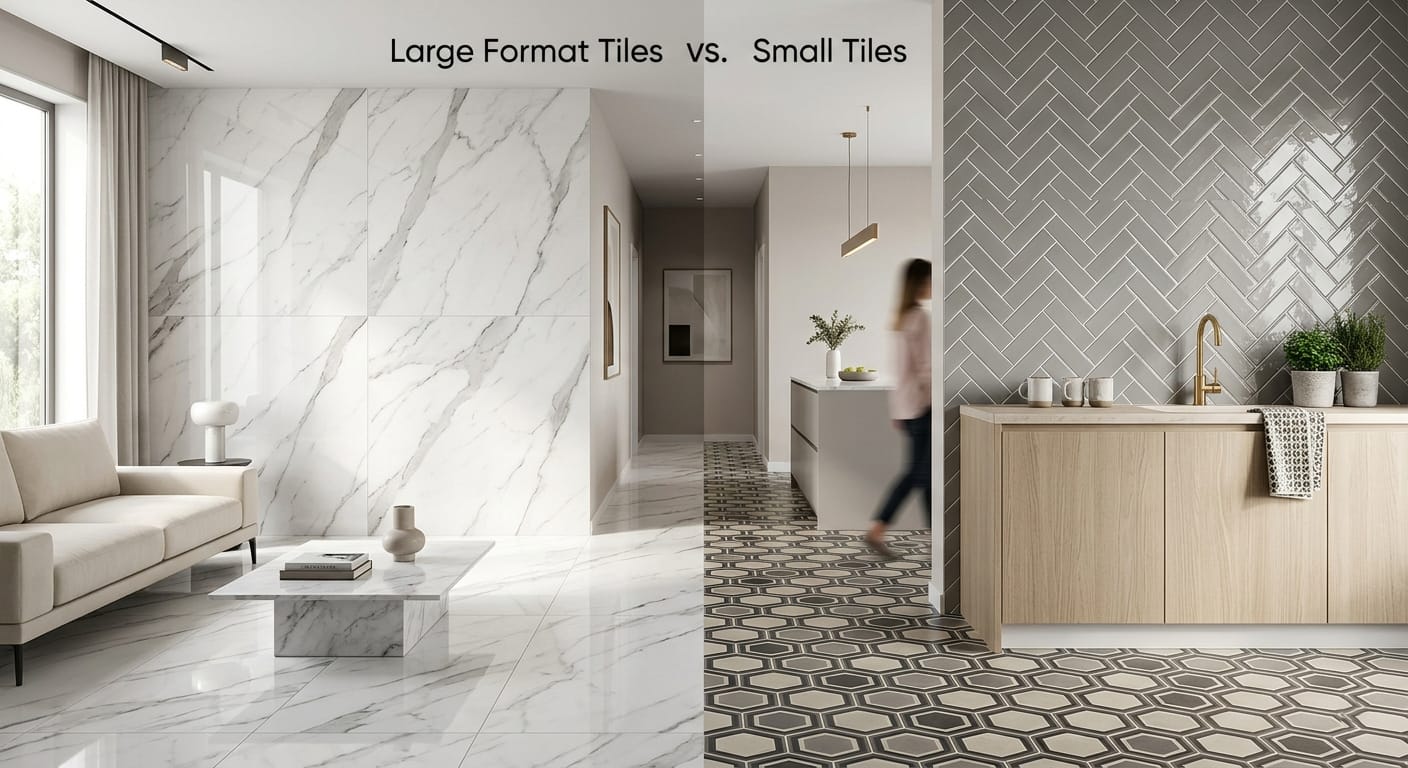
Large format tiles are known for their seamless appearance, modern elegance, and spacious visual effect, while small tiles provide creativity, intricate detailing, and decorative flexibility. Choosing the right tile size involves understanding room dimensions, maintenance needs, installation requirements, budget, and design goals. In this comprehensive guide, we explore the differences between large format and small tiles to help you decide which option works best for your residential or commercial project.
1. Introduction to Tile Sizes in Modern Interior Design:
Tile sizes have become one of the most important elements in modern interior and architectural design. The evolution of tile manufacturing technology has introduced a wide range of tile dimensions that cater to different design preferences and functional needs. Earlier, small tiles dominated homes and commercial projects because they were easier to manufacture and install. However, modern design trends now favour larger tiles due to their elegant appearance and ability to create seamless surfaces.
Today, tile selection is not only about colour or texture but also about choosing the right size for the intended space. Large format tiles create a luxurious and contemporary atmosphere, while small tiles offer decorative detailing and creative layouts. Designers carefully choose tile dimensions based on room size, lighting, traffic, and aesthetic goals. Whether it is a spacious hotel lobby, a modern bathroom, or a compact kitchen backsplash, tile size significantly influences the overall visual balance and functionality of the space.
2. What Are Large Format Tiles? Features and Popular Sizes:
Large format tiles are tiles that typically measure 600x1200mm or larger. Popular sizes include 800x1600mm, 1200x1800mm, and even slab tiles used for premium architectural projects. These tiles are widely preferred in modern luxury interiors because they provide a clean, minimalistic, and seamless appearance with fewer grout lines.
One of the key features of large format tiles is their ability to create a spacious visual effect. Since there are fewer joints between tiles, surfaces look more continuous and sophisticated. Large tiles are available in porcelain, ceramic, marble-look, concrete-look, and natural stone finishes, making them suitable for residential and commercial projects alike.
Another advantage is their compatibility with modern architectural styles. Contemporary homes, hotels, offices, and retail spaces often use large tiles to achieve an elegant and premium aesthetic. Additionally, advanced manufacturing techniques now allow large format tiles to be highly durable, stain-resistant, and suitable for both walls and floors.
3. Understanding Small Tiles and Their Design Applications:
Small tiles are generally available in sizes such as 100x100mm, 300x300mm, subway tiles, mosaic tiles, and decorative patterned tiles. These tiles are popular for adding artistic detail, texture, and creativity to interiors and exteriors.
One of the biggest strengths of small tiles is design flexibility. They can create intricate patterns, geometric layouts, and decorative wall features that large tiles cannot easily achieve. Mosaic tiles, for example, are commonly used in bathrooms, swimming pools, kitchen backsplashes, and feature walls due to their decorative appeal.
Small tiles are also ideal for curved surfaces and compact areas where precise detailing is required. Their smaller dimensions allow better grip and slip resistance in wet areas because of the increased number of grout lines. From traditional interiors to modern decorative concepts, small tiles continue to remain an essential design element for creative applications and customized aesthetics.
4. Visual Impact: How Tile Size Changes the Look of a Space:
Tile size dramatically affects how a room looks and feels. Large format tiles create a clean and uninterrupted appearance that gives interiors a sophisticated and modern appeal. They reduce visual clutter and help spaces appear more open and expansive.
Small tiles, on the other hand, introduce texture, movement, and visual detail. They attract attention and can become decorative focal points in a room. Patterned mosaics and subway tiles add personality and character to kitchens, bathrooms, and feature walls.
Large tiles are generally preferred for minimalist interiors where simplicity and luxury are priorities. Small tiles work best when homeowners want artistic detailing or classic styling. The direction of tile placement, grout colour, and surface finish further influence the final visual effect. Ultimately, tile size becomes a powerful design tool that shapes the ambiance, depth, and aesthetic identity of a space.
5. Space Enhancement: Which Tile Size Makes Rooms Look Bigger?
Large format tiles are often recommended for making rooms appear larger because they minimize grout lines and create a more continuous surface. Fewer interruptions allow the eye to move smoothly across the floor or wall, visually expanding the space.
This is especially beneficial in apartments, modern homes, hotel suites, and commercial interiors where maximizing visual openness is important. Light-coloured large tiles further enhance brightness and spaciousness.
Small tiles can sometimes make a room feel busier due to multiple grout joints and patterns. However, they can still work effectively in compact areas when used strategically with proper colour combinations and layouts. Mosaic tiles, for example, add charm and texture to small bathrooms without overwhelming the space.
Overall, large format tiles are generally more effective in creating a spacious and luxurious appearance, especially in modern interior design concepts focused on minimalism and elegance.
6. Installation Process and Labour Differences Between Large and Small Tiles
The installation process varies significantly between large and small tiles. Large format tiles require highly skilled labour because proper levelling and alignment are essential. Specialized adhesives, levelling systems, and surface preparation are necessary to avoid lippage and uneven finishes.
Since large tiles cover more surface area, installation can be faster in open spaces once the groundwork is completed. However, handling large tiles requires professional expertise and careful transportation to prevent breakage.
Small tiles are easier to handle individually but require more labour because of the larger number of pieces and grout joints. Installing mosaic tiles can be particularly time-consuming due to the detailed alignment work involved.
Labour costs for large tiles are generally higher due to technical requirements, while small tiles may increase labour time because of the extensive placement process. Choosing experienced tile installers is essential for achieving high-quality results with either option.
7. Maintenance & Cleaning Comparison: Grout Lines and Upkeep:
Maintenance is one of the biggest practical differences between large and small tiles. Large format tiles are easier to clean because they have fewer grout lines. Less grout means reduced dirt accumulation, lower moisture absorption, and easier maintenance overall.
This makes large tiles highly suitable for living rooms, commercial spaces, and modern kitchens where easy cleaning is a priority. Polished porcelain large tiles are especially popular because they resist stains and maintain their shine for years.
Small tiles, especially mosaics, require more maintenance due to the increased number of grout joints. Grout lines can trap dirt, soap residue, and moisture over time, especially in bathrooms and kitchens. Regular sealing and cleaning may be necessary to maintain appearance and hygiene.
However, advancements in stain-resistant grout technology have improved maintenance for small tiles as well. The right cleaning routine and quality grout materials can significantly enhance durability and cleanliness.
8. Durability and Performance of Large Format vs Small Tiles:
Both large and small tiles can offer excellent durability when manufactured using high-quality materials such as porcelain and vitrified ceramic. Large format porcelain tiles are extremely strong and suitable for high-traffic residential and commercial environments.
Small tiles also provide excellent performance, especially in wet areas and curved surfaces. Their multiple grout lines improve flexibility and reduce the risk of cracking caused by structural movement.
Large tiles may require perfectly level substrates to prevent stress points and potential breakage. Small tiles are generally more forgiving on uneven surfaces and complex layouts.
Ultimately, durability depends more on tile quality, installation standards, and maintenance practices rather than size alone. Premium manufacturers ensure both large and small tiles meet modern performance standards for strength, stain resistance, and longevity.
9. Best Tile Size for Living Rooms and Luxury Interiors:
Large format tiles are widely considered the best choice for luxury living rooms and premium interiors. Their seamless appearance creates a sophisticated and elegant atmosphere that complements modern furniture and architectural designs.
Popular choices include marble-look porcelain tiles in 600x1200mm and larger sizes. These tiles deliver the luxurious appearance of natural stone while offering better durability and easier maintenance.
Small tiles are less commonly used for entire living room floors but can be incorporated as decorative elements or feature wall accents. Patterned mosaics and textured tiles can enhance focal areas such as TV units, fireplaces, and decorative niches.
For spacious interiors, large format tiles create a grand and visually expansive effect that aligns perfectly with contemporary luxury trends in residential and commercial design.
10. Choosing the Right Tiles for Bathrooms and Wet Areas:
Bathrooms require tiles that balance style, safety, and moisture resistance. Large format tiles are popular for bathroom walls because they create a sleek spa-like appearance with fewer grout lines and easier cleaning.
However, small tiles and mosaics remain highly preferred for shower floors and wet zones because the additional grout lines provide better slip resistance. They also adapt easily to floor slopes required for water drainage.
Combining large wall tiles with small mosaic flooring is one of the most effective bathroom design strategies. This approach delivers both luxury aesthetics and practical safety benefits.
Textured finishes, matte surfaces, and anti-slip coatings are essential considerations when selecting bathroom tiles. Proper waterproofing and professional installation further ensure long-lasting performance in wet environments.
11. Kitchen Applications: Large Tiles vs Mosaic & Small Tiles:
Kitchens benefit from both large and small tiles depending on the design objective. Large format tiles are ideal for kitchen floors because they provide easy maintenance, modern aesthetics, and reduced grout cleaning.
Small subway tiles and mosaics are highly popular for backsplashes because they add decorative texture and visual interest. These tiles allow homeowners to experiment with colours, patterns, and creative layouts.
Marble-look large tiles paired with geometric mosaic backsplashes create a premium modern kitchen design. Matte and glossy finishes can further enhance the kitchen’s overall style.
The right balance between functionality and decoration is essential when selecting kitchen tiles. Combining large floor tiles with decorative small wall tiles often produces the best visual and practical results.
12. Cost Comparison: Material, Installation, and Maintenance Expenses:
The overall cost of tile installation depends on tile quality, size, labour, maintenance, and project complexity. Large format tiles usually have a higher material cost because of advanced manufacturing processes and premium finishes.
Installation costs may also increase due to the need for skilled labour, specialized adhesives, and levelling systems. However, fewer grout lines can reduce long-term maintenance expenses.
Small tiles are often more affordable individually but can increase labour costs because installation requires more time and precision. Maintenance expenses may also rise due to grout cleaning and sealing requirements.
Budget planning should include not only tile prices but also installation quality, durability, and future maintenance. Investing in premium tiles often provides better long-term value and aesthetic satisfaction.
13. Trending Tile Designs and Surface Finishes for Modern Spaces:
Modern tile trends focus on natural aesthetics, luxurious textures, and minimalist finishes. Large format marble-look porcelain tiles continue to dominate luxury interior projects due to their elegant appearance and seamless design.
Concrete-look, stone-look, terrazzo, and wood-look surfaces are also highly popular in both residential and commercial spaces. Matte finishes are increasingly preferred for their sophisticated appearance and slip resistance.
Small tiles are trending in decorative applications such as geometric mosaics, handmade textures, subway tiles, and artistic feature walls. Bold patterns and contrasting grout colours are also gaining popularity.
Modern tile technology allows manufacturers to create realistic textures and advanced finishes that combine aesthetics with durability. This gives homeowners and designers endless possibilities for customization and creativity.
14. Large Format Tiles for Commercial and High-End Projects:
Commercial projects such as hotels, malls, offices, airports, and luxury retail stores frequently use large format tiles to create impressive and professional environments. These tiles enhance visual continuity and provide a modern architectural appearance.
Large tiles also improve maintenance efficiency in high-traffic areas because fewer grout lines reduce dirt accumulation and cleaning requirements. Their durability makes them suitable for demanding commercial conditions.
Premium commercial interiors often utilize polished porcelain slabs and oversized marble-look tiles to achieve luxury aesthetics. Large format tiles also complement contemporary lighting and minimalist architectural designs.
Their ability to create spaciousness and sophistication makes them a preferred choice for architects and developers working on high-end commercial and hospitality projects.
15. Small Tiles for Decorative Walls, Patterns, and Creative Designs:
Small tiles excel in decorative and artistic applications where creativity and customization are essential. Mosaic tiles, hexagonal tiles, and subway tiles allow designers to create intricate patterns, textures, and feature walls.
These tiles are perfect for accent areas such as kitchen backsplashes, shower niches, reception walls, swimming pools, and decorative partitions. Their variety of colours and finishes enables endless design combinations.
Small tiles can transform ordinary spaces into visually dynamic interiors full of character and personality. Patterned tile layouts also help create vintage, Mediterranean, industrial, or contemporary design themes.
For homeowners and designers seeking originality and artistic detail, small tiles remain one of the most versatile and visually expressive design solutions available today.
16. Slip Resistance and Safety Considerations for Different Tile Sizes:
Safety is an important factor when choosing tiles for residential and commercial spaces. Tile size itself does not directly determine slip resistance, but surface finish and grout lines significantly influence safety.
Small tiles generally offer better grip in wet areas because multiple grout joints create additional traction. This is why mosaic tiles are commonly used for bathroom floors, swimming pools, and outdoor walkways.
Large format tiles can also be safe when selected with matte, textured, or anti-slip finishes. Polished surfaces may become slippery in wet conditions if not used carefully.
Selecting the correct surface finish for the intended environment is essential. Anti-slip porcelain tiles provide excellent safety while maintaining modern aesthetics and long-term durability.
17. How Tile Size Affects Interior Style and Overall Aesthetics:
Tile size strongly influences the personality and visual language of a space. Large format tiles create a sleek, luxurious, and contemporary appearance that aligns with minimalist design trends.
Small tiles add texture, detail, and decorative richness. They are often used in traditional, industrial, rustic, or artistic interiors where visual complexity is desired.
The choice between large and small tiles should complement furniture, lighting, wall colours, and architectural style. Neutral large tiles create calm and elegant interiors, while colourful mosaics introduce vibrancy and creativity.
Interior designers often use tile size strategically to control visual proportions and create a balanced design composition throughout residential and commercial environments.
18. Combining Large and Small Tiles for Unique Design Concepts:
Modern interior design increasingly combines large and small tiles to achieve balanced aesthetics and enhanced functionality. Large format tiles are commonly used for main floors and walls, while small tiles create decorative accents and feature zones.
For example, a bathroom may feature large marble-look wall tiles paired with mosaic shower flooring. Kitchens often combine large floor tiles with subway tile backsplashes for visual contrast.
This design approach allows homeowners to enjoy the spacious appearance of large tiles while adding creativity and texture through smaller decorative elements.
Combining different tile sizes also helps define zones within open-plan layouts and creates visually engaging interiors that feel modern, luxurious, and personalized.
19. Common Mistakes to Avoid While Selecting Tile Sizes:
One common mistake is choosing oversized tiles for very small rooms without considering layout and cutting requirements. Improper planning can lead to excessive wastage and awkward visual proportions.
Another mistake is selecting small tiles for large open areas, which may create visual clutter and increase maintenance due to excessive grout lines. Ignoring slip resistance and surface finish is also a major error in wet areas.
Some homeowners focus only on appearance without considering installation complexity, maintenance, or long-term durability. Poor grout colour selection can also negatively affect the final look of tiled surfaces.
Consulting experienced tile professionals and planning layouts carefully can help avoid these mistakes and ensure the best balance between aesthetics, functionality, and budget.
20. How to Choose the Perfect Tile Size Based on Room Dimensions:
Selecting the ideal tile size requires evaluating room dimensions, ceiling height, lighting, furniture arrangement, and overall design goals. Large rooms generally benefit from large format tiles because they enhance openness and luxury.
Smaller rooms can also use large tiles effectively when layouts are planned properly. Light-coloured large tiles often make compact spaces appear bigger and brighter.
Small tiles are better suited for curved surfaces, decorative applications, and compact feature zones where detailed designs are required. Room function also plays a major role in tile selection.
Professional tile planning ensures balanced proportions, reduced wastage, and improved aesthetics. The right tile size should enhance both practicality and visual harmony within the space.
21. Face Impex Pvt Ltd Collection of Large Format Premium Tiles:
Face Impex Pvt Ltd offers an extensive collection of premium large format porcelain and ceramic tiles designed for modern residential and commercial projects. Their product range includes luxurious marble-look surfaces, elegant stone-inspired designs, contemporary concrete textures, and innovative finishes suitable for walls and floors.
The company focuses on combining international design trends with advanced manufacturing technology to deliver superior quality and durability. Large format collections from Face Impex Pvt Ltd are ideal for luxury living rooms, hotels, offices, showrooms, and architectural spaces seeking sophisticated aesthetics.
Their tiles are manufactured to meet high performance standards, ensuring excellent resistance to stains, moisture, scratches, and heavy traffic. With a wide variety of colours, textures, and dimensions available, Face Impex Pvt Ltd provides versatile tile solutions for both modern and classic design concepts.
22. Why Face Impex Pvt Ltd Offers the Perfect Balance of Style, Quality, and Versatility:
Face Impex Pvt Ltd stands out in the tile industry because of its commitment to quality, innovation, and customer satisfaction. The company combines advanced manufacturing technology with modern design expertise to produce tiles that meet global standards.
Their collections offer the perfect balance between luxury aesthetics and practical durability, making them suitable for homes, commercial projects, and export markets. From elegant large format porcelain slabs to decorative wall solutions, the brand provides products that match diverse architectural styles.
Face Impex Pvt Ltd emphasizes premium finishes, dimensional accuracy, stain resistance, and long-lasting performance. Their ability to offer stylish yet functional tile solutions makes them a trusted choice among architects, interior designers, builders, and homeowners seeking reliable premium tile products.
23. Expert Tips for Selecting Tiles for Residential and Commercial Projects:
Selecting tiles involves more than choosing attractive colours or textures. Experts recommend evaluating room function, foot traffic, maintenance requirements, lighting conditions, and design themes before making a final decision.
Large format tiles are generally ideal for open spaces and luxury interiors, while small tiles work best for decorative accents and wet areas requiring extra grip. Matte finishes are preferred for safety, while polished surfaces enhance elegance in dry areas.
It is also important to consider tile quality, water absorption rate, durability, and slip resistance. Choosing high-quality porcelain tiles ensures long-term performance and easier maintenance.
Consulting professional designers and tile specialists can help optimize tile layouts, reduce wastage, and create visually balanced interiors that align with modern architectural trends.
24. Future Trends in Large Format and Small Tile Designs:
The future of tile design is focused on sustainability, large seamless surfaces, realistic textures, and personalized aesthetics. Large format porcelain slabs are expected to become even more popular in luxury residential and commercial architecture.
Minimalist interiors with neutral tones, natural stone effects, and matte finishes will continue dominating modern design trends. Technological advancements will further improve durability, lightweight construction, and installation efficiency for oversized tiles.
Small tiles will continue evolving through artistic mosaics, handcrafted textures, bold geometric patterns, and customizable decorative concepts. Smart tile technology and eco-friendly manufacturing processes are also becoming major industry trends.
As design preferences evolve, both large and small tiles will continue playing important roles in creating innovative, stylish, and functional architectural environments.
Conclusion: Which Tile Size Works Best for Your Space?
Choosing between large format tiles and small tiles ultimately depends on your space, design goals, functionality, and personal preferences. Large format tiles are ideal for creating luxurious, spacious, and modern interiors with minimal grout lines and easy maintenance. They work exceptionally well in living rooms, commercial spaces, and high-end architectural projects.
Small tiles, on the other hand, provide creative flexibility, decorative detailing, and improved slip resistance for bathrooms, backsplashes, and artistic feature walls. Their versatility makes them perfect for customized and visually dynamic spaces.
In many cases, combining both tile sizes delivers the best results by balancing elegance with decorative appeal. By understanding the strengths of each option and selecting high-quality products from trusted manufacturers like Face Impex Pvt Ltd, homeowners and designers can create beautiful, durable, and functional interiors that stand the test of time.