
Introduction:
In today’s rapidly expanding construction and interior design industry, tiles have become a global commodity with high demand across residential, commercial, and architectural sectors. For international distributors, bulk tile purchasing is not just about sourcing products at competitive prices, it’s about understanding market trends, ensuring quality, managing logistics, and building reliable partnerships. A well-informed approach can significantly impact profitability, customer satisfaction, and long-term business success.
This comprehensive guide by Face Impex Pvt Ltd is designed to help international distributors navigate every critical aspect of bulk tile buying, from selecting the right products to managing global shipments efficiently.
1. Understanding Global Tile Market Trends:
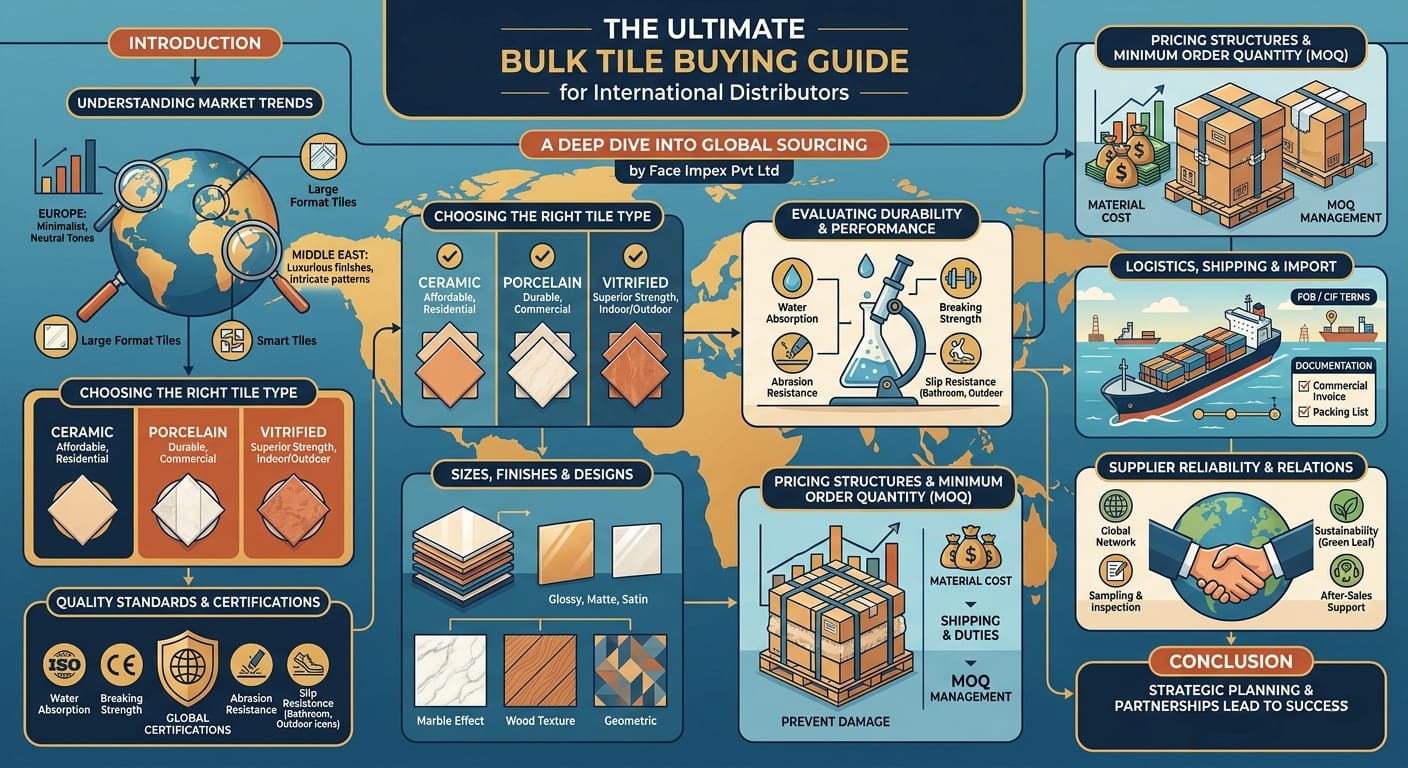
The global tile market is constantly evolving, influenced by changing consumer preferences, technological advancements, and regional design trends. International distributors must stay updated with what’s trending in different parts of the world. For instance, European markets often favour minimalist designs with neutral tones, while Middle Eastern regions may demand luxurious finishes with intricate patterns. Large-format tiles and seamless surfaces are gaining popularity globally due to their modern appeal and reduced grout lines.
Additionally, technological innovations such as digital printing, anti-bacterial coatings, and smart tiles are reshaping the industry. These advancements not only enhance aesthetics but also improve functionality. Distributors who keep a close eye on such developments can better align their inventory with market demands. Understanding regional preferences and forecasting future trends ensures that distributors remain competitive and relevant in the international marketplace.
2. Choosing the Right Tile Type:
Selecting the appropriate tile type is crucial for meeting the needs of different markets. Ceramic tiles are widely used for their affordability and versatility, making them ideal for residential applications. Porcelain tiles, known for their durability and low water absorption, are preferred in high-traffic areas and commercial projects. Vitrified tiles offer superior strength and are suitable for both indoor and outdoor use.
Specialty tiles, such as mosaic, glass, or designer tiles, cater to niche markets and premium projects. Each type serves a unique purpose, and understanding their properties helps distributors recommend the right products to their clients. Climate conditions, usage areas, and customer preferences should all be considered when selecting tile types. A well-balanced product portfolio ensures wider market reach and increased sales opportunities.
3. Quality Standards & Certifications:
Quality assurance is a top priority in international trade. Distributors must ensure that tiles comply with global standards such as ISO certifications, CE marking, and other regional quality benchmarks. These certifications indicate that the products meet specific safety, durability, and performance criteria.
Adhering to international standards not only builds trust with clients but also simplifies the import process. Many countries have strict regulations regarding construction materials, and non-compliance can lead to shipment delays or rejections. Reliable suppliers like Face Impex Pvt Ltd provide certified products that meet global requirements, ensuring smooth transactions and consistent quality across all shipments.
4. Evaluating Tile Durability & Performance:
Durability is a key factor when purchasing tiles in bulk. Distributors must evaluate important technical parameters such as water absorption rate, breaking strength, abrasion resistance, and slip resistance. For example, low water absorption tiles are ideal for climates, while high abrasion resistance is essential for commercial spaces.
Slip resistance is particularly important for areas like bathrooms, kitchens, and outdoor spaces where safety is a concern. Understanding these performance metrics helps distributors select tiles that meet the functional requirements of different projects. Investing in high-quality, durable tiles reduces the risk of complaints and enhances customer satisfaction, ultimately strengthening brand reputation.
5. Selecting Sizes, Finishes & Designs:
Tile aesthetics play a major role in influencing buying decisions. Today’s market offers a wide range of sizes, from standard formats to large slabs that create a seamless look. Large-format tiles are especially popular in modern architecture due to their sleek and luxurious appearance.
Finishes such as glossy, matte, and satin each have their own appeal and application. Glossy tiles enhance brightness and are ideal for walls, while matte finishes provide a natural look and better slip resistance. Design trends, including marble effects, wood textures, and geometric patterns, continue to dominate global markets. Distributors should offer a diverse selection to cater to varying tastes and project requirements.
6. Understanding Pricing Structures in Bulk Orders:
Bulk purchasing provides significant cost advantages, but understanding pricing structures is essential. Factors such as tile material, size, finish, and design complexity directly influence pricing. Larger orders often come with discounted rates, making it more economical for distributors.
However, pricing is not just about the product cost. Additional expenses like shipping, packaging, and customs duties must also be considered. Transparent pricing from suppliers helps distributors plan their budgets effectively. By analysing cost structures and negotiating favourable terms, distributors can maximize their profit margins while remaining competitive in their markets.
7. Minimum Order Quantity (MOQ) & Custom Orders:
Minimum Order Quantity (MOQ) is a critical factor in bulk purchasing. It defines the minimum number of units a distributor must order from a supplier. Understanding MOQ requirements helps distributors manage inventory and cash flow efficiently.
Customization options, such as unique designs, sizes, or branding, can provide a competitive edge in the market. Suppliers offering flexible MOQs and customization capabilities enable distributors to cater to specific client needs. This flexibility is particularly valuable for entering new markets or fulfilling specialized project requirements.
8. Packaging Standards for International Shipping:
Proper packaging is essential to prevent damage during transit. Tiles are fragile products, and inadequate packaging can lead to significant losses. High-quality packaging materials, such as reinforced cartons, wooden pallets, and protective layers, ensure that tiles reach their destination safely.
International shipping involves long transit times and multiple handling stages, increasing the risk of breakage. Reliable suppliers follow strict packaging standards to minimize these risks. Distributors should prioritize suppliers who invest in secure packaging solutions, as this directly impacts product quality upon delivery.
9. Logistics, Shipping & Delivery Timelines:
Efficient logistics management is crucial for timely deliveries. Distributors must understand shipping terms such as FOB (Free on Board) and CIF (Cost, Insurance, and Freight). These terms define the responsibilities of the supplier and buyer during transportation.
Transit times vary depending on the destination and shipping method. Proper planning and coordination with logistics partners help avoid delays and ensure smooth operations. Tracking shipments and maintaining clear communication with suppliers are essential for managing delivery schedules effectively.
10. Import Regulations & Documentation:
International trade requires strict compliance with import regulations and documentation. Essential documents include commercial invoices, packing lists, certificates of origin, and quality certificates. Missing or incorrect documentation can lead to customs delays or penalties.
Each country has its own import requirements, and distributors must stay informed about these regulations. Working with experienced exporters simplifies the process, as they provide accurate documentation and ensure compliance with international standards.
11. Supplier Reliability & Reputation:
Choosing a reliable supplier is one of the most important decisions for distributors. Factors such as industry experience, global presence, client testimonials, and production capacity should be carefully evaluated.
A reputable supplier ensures consistent product quality, timely deliveries, and transparent communication. Face Impex Pvt Ltd has established itself as a trusted exporter with a strong global network, making it a dependable partner for international distributors.
12. Sampling & Quality Inspection Process:
Before placing bulk orders, distributors should request product samples to evaluate quality, design, and finish. Sample approvals help avoid discrepancies and ensure that the final shipment meets expectations.
Third-party inspections add an extra layer of assurance by verifying product quality before dispatch. This process minimizes risks and builds confidence in the supplier’s capabilities. A thorough inspection system is essential for maintaining high standards in international trade.
13. Sustainability & Eco-Friendly Tile Options:
Sustainability is becoming increasingly important in the global tile industry. Eco-friendly tiles made from recycled materials and manufactured using energy-efficient processes are gaining popularity.
Distributors who offer sustainable products can appeal to environmentally conscious consumers and comply with green building standards. Partnering with manufacturers who prioritize sustainability not only benefits the environment but also enhances brand value in the market.
14. After-Sales Support & Customer Service:
Strong after-sales support is crucial for maintaining customer satisfaction. Distributors should work with suppliers who provide prompt responses, technical assistance, and effective issue resolution.
Good customer service ensures smooth communication and builds trust between partners. Whether it’s handling complaints or providing additional product information, reliable support strengthens long-term business relationships.
15. Building Long-Term Distributor Relationships:
Successful tile distribution is built on strong, long-term partnerships. Consistent supply, transparent communication, and mutual trust are key elements of a sustainable business relationship.
Distributors should focus on collaboration and growth with their suppliers. By working closely together, both parties can adapt to market changes, explore new opportunities, and achieve shared success. Long-term partnerships lead to stability, better pricing, and increased business growth.
Conclusion:
Bulk tile purchasing for international distribution is a complex yet rewarding process that requires careful planning, market understanding, and strategic decision-making. From selecting the right tile types to managing logistics and ensuring quality compliance, every step plays a vital role in achieving success.
By partnering with a trusted exporter like Face Impex Pvt Ltd, distributors can gain access to high-quality products, reliable services, and expert guidance. With the right approach and strong partnerships, international distributors can expand their reach, meet global demands, and build a successful, sustainable business in the competitive tile industry.